Dressed to Transgress: How Fashion is the language of Queer Music
By Elspeth Chapman
Pop is getting louder; more queer and a whole lot more styled. But it’s not just the music that’s making noise, it’s the clothes too.
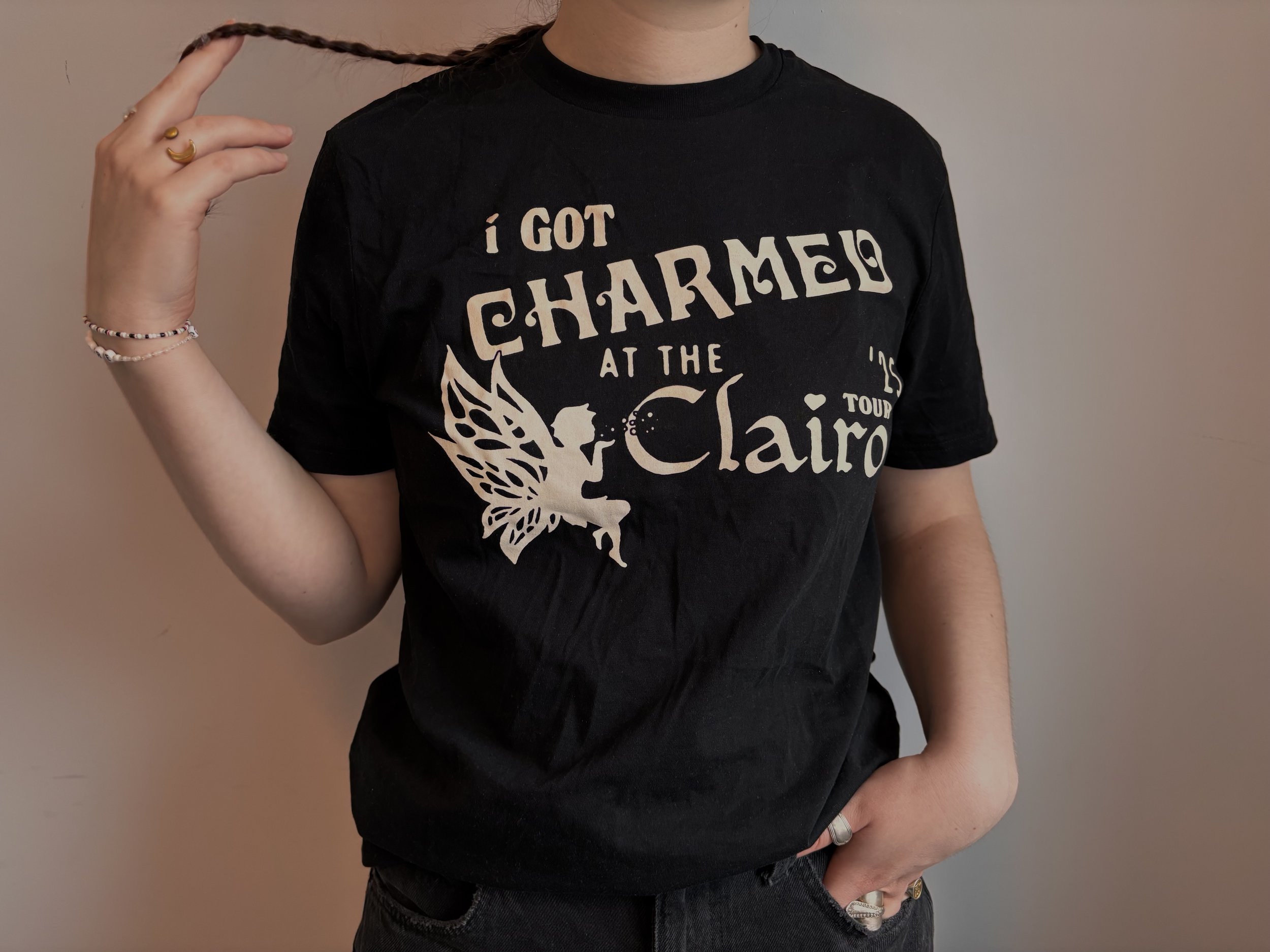
Photo by Elspeth Chapman
In the past year, queer artistry isn’t just heard, it’s seen, lived, and felt through DIY couture, thrifted textures and collaborations. A new generation of queer musicians such as Billie Eilish, Doechii, Chappell Roan and Young Miko are taking to the stage not only to perform songs but to express their identity on their own terms through music and fashion, often with their fans as a reflection of those visuals too.
Right now, female queer musicians are redefining what it means to perform their identity. At the recent Grammys, Doechii explored a different narrative through her hip-hop music framed within a tailored look for herself and her dancers. In an interview with them she expressed her motive behind her looks.
“I can say the story that I’m telling through fashion is that ‘I’m everything.’ I’ve said that in my music, but now I want to say it through fashion.” – Doechii
Fashion has often been the connective tissue between the queer community and the mainstream media.
Helton Levy has a background in journalism and writing; he’s spent years spotlighting queer communities and queer culture. Levy brings a global perspective that can help to make sense of the impact of queer culture and what it means to the community.
This is more than just aesthetic; it is a continuation of a legacy. For queer communities, fashion has always been a survival tool, a rebellion, a way of saying ‘this is who I am’ without waiting for the permission of society. Annie Lennox’s short hair and masculine tailoring has paved the way for today’s queer artists. Boygenius (comprising of Phoebe Bridgers, Lucy Dacus and Julien Baker) create a trio of tailored suits and monochromatic looks reminiscent of Lennox’s. Their intentionally, often matching, outfits honour queer linage and provide visibility for the community whilst on stage.
Right now, the new class of queer female artists are building entire visual dimensions that merge sound and style, pulling fashion back into the centre of queer music. Accessibility to queer artists and their fashion is so important to share, for the younger generations and the generations passed. When language was insufficient or unsafe, clothes did the talking.
The connection between the artist and the audience, between the sound and style is a kind of safe haven. At a recent Clairo concert in London, a fan, Amelia aged 19, said “when we get dressed up for a show, it’s like we’re transforming into our best version, it makes me feel safe and seen”.
For a generation that’s more openly queer than any before, these shows are more than just performances. They create spaces where people can show up as themselves, no questions asked. Its where queer fashion isn’t just accepted, it’s the norm. From homemade fits to fluid fashion, it is just as important as what’s happening on stage. It’s not just a gig; it’s a moment of freedom and a chance for the community to exhale.
Queer artists today are continuing a lineage of queer visual rebellion that stretches back decades. The bold styling of artists like Billie Eilish owes as much to music as it does to queer history. Known for her oversized, baggy clothes, Eilish uses fashion to exist outside of societies perceptions of a female pop star. However, in her 2021 British Vogue cover, she shocked fans by wearing corsets and old Hollywood style pin curls, embracing a more hyper-feminine aesthetic.
The contrast wasn’t a contradiction; it was more of a statement. In response to the online backlash Eilish spoke to British Vogue and said “My thing is, I can do whatever I want,” she said, affirming her right to shift between masculine and feminine styles without explanation.
Billie Eilish continues a queer fashion tradition, much like Grace Jones and Prince, who blended hyperfeminine and masculine elements to challenge gender norms. Eilish’s style shifts fluidly, asserting that queerness isn’t fixed. Her fashion is an evolving expression of rebellion, embracing her identity without boundaries.
Today, that visual language lives on. Chappell Roan’s big wigs and cabaret style clothes echo the legacy of drag. Doechii’s preppy punk look touches on rebellion. These artists wear their queerness, literally, and in doing so, they create space for others to do the same. It is their wink to those who came before, and a door flung open for those still figuring it out. It does make us think, whose queerness are we celebrating and whose are we misrepresenting?
Recently, marginalised queer groups have been increasingly brought into mainstream media in the name of "inclusion." Whilst visibility is a step forward, the conversation around this representation is complex. Media platforms are beginning to understand the reach of certain artists of colour, gender nonconforming individuals and creatives. This representation may appear to be a step in the right direction… however, Levy says, this visibility often comes with commercialisation that can dilute their stories.
To truly honour queer identity in fashion, the industry has to go deeper than just the surface. It needs to focus on the voices and cultures that have long been marginalized. It needs to stop focusing on the appropriation of their ‘aesthetics’ for the sake of trends or clout. That means listening to the fashion designers, artists, musicians, who are actively challenging and reshaping what queer representation looks like.
Both music and fashion aren’t just about seasons or sales, it’s about expression and creativity. They should honour cultural lineages that existed long before western ideas of gender and sexuality even came into play. Decolonizing queer fashion means going back to those roots and choosing to make space for stories that don’t fit into commercial moulds.
What all of these artists understand is that music alone isn’t enough. Fashion gives them another language…a way to extend their identities and connect with fans who may see themselves in their music or art.
Looking ahead, the future of queer expression in music and fashion is fluid and fearless. It’s no longer confined to runways or magazine pages. Instead, it’s unfolding at gigs and online. It manifests in the thrifted, handmade, and carefully crafted looks that speak volumes without saying a word. It’s fans showing up in outfits that mirror the artist’s or using fashion as an indicator tool.
Queer fashion has always been here, even when it was hidden within codes and subcultures. Queer artists aren’t asking to be included in mainstream spaces, they’re building their own spaces altogether. With their iconography rich with history; nods to drag, ballroom, punk, rave, and more. Every look is a reference. Every outfit is an act of self-identification.
Getting dressed, for many within the queer community, isn’t just about expression… it’s about perception and how it translates. It’s how identities start to shape in the world, ensuring history, arts and culture are stitched together.
So, when we speak of fashion as the language of queer music, we’re talking about more than what’s worn and visible. We’re talking about celebration and memory, presence and perseverance.
Within Queer music, to dress up is to speak out, to be loud and proud without saying a word. To be dressed to transgress.