FEATURE: Marie Antoinette
By Elspeth Chapman
Lately, Marie Antoinette seems to be everywhere: in museums, exhibitions, on runways, in film, and across social media. Yet for all the attention she receives, the once queen of France is often reduced to a shopaholic aristocrat who said, “let them eat cake.”
The Victoria and Albert Museum in South Kensington is currently displaying Marie Antoinette: Style, a collection of her clothes, journals and personal objects that offers a far more complex picture of her life. Running until March 22nd, 2026, the exhibition reframes Marie Antoinette in a different light, building on a conversation that rarely scratches beneath the surface. Rather than focusing on excess alone, it explores her use of fashion as a form of influence, communication and political negotiation.
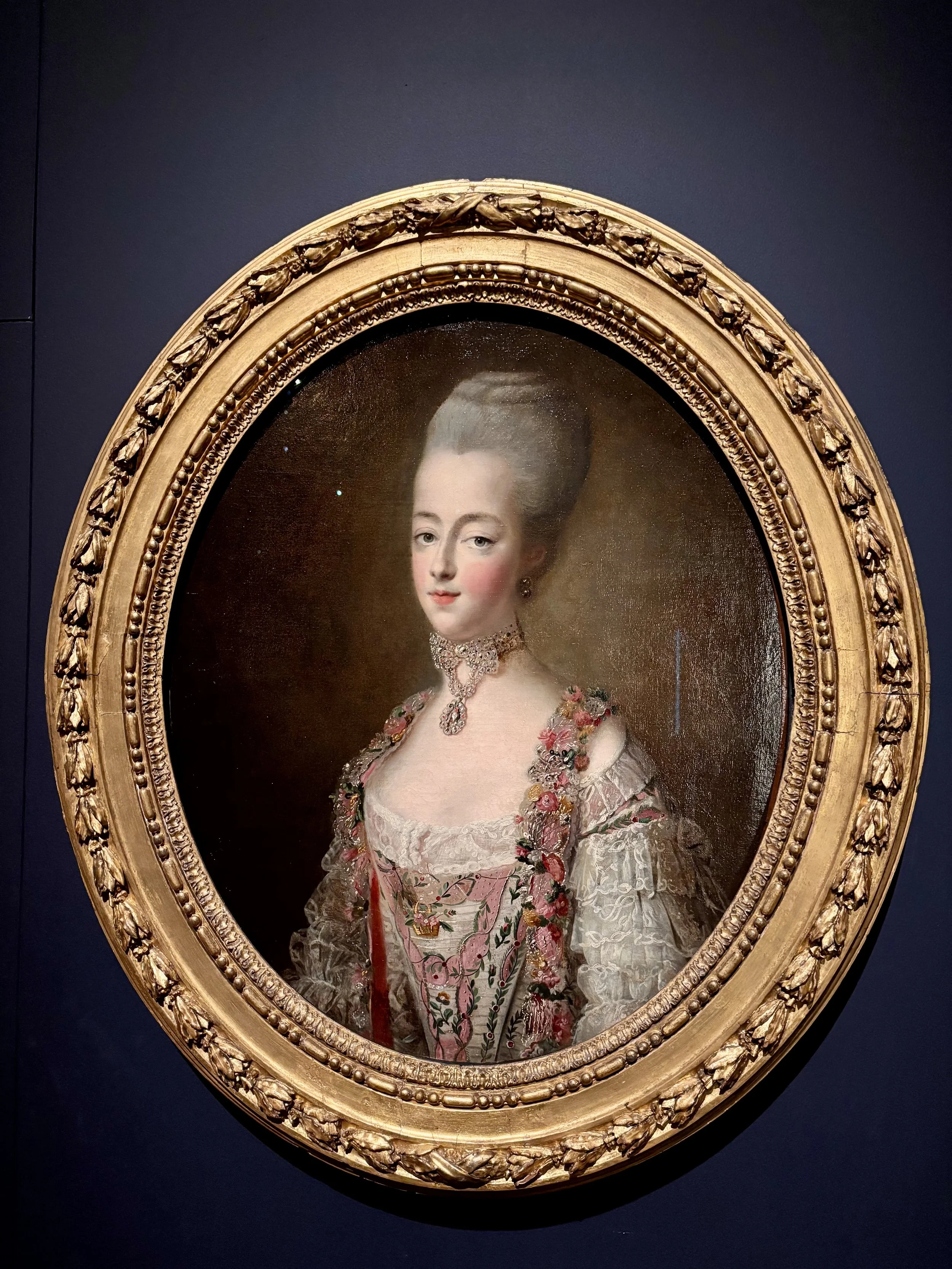
Image by Elspeth Chapman
Born in 1755 in Vienna, Marie Antoinette was the youngest daughter of Empress Maria Theresa of Austria. At just fourteen years old, she was married to the future Louis XVI of France. This marriage aimed to secure peace between two rival powers. From the moment she crossed the French border, her body and appearance became political, she was stripped of her Austrian clothing and redressed in French fashion. Fashion marked her transformation from an individual to a political symbol before she even reached Versailles.
The French court was under strict dress codes and rules of dress that reinforced hierarchy, power and tradition. Clothing was a language of rank and class and as queen, Marie Antoinette was expected to embody the monarchy. However, she soon began to challenge these expectations and change the course of French fashion forever. With the help of her dressmaker Rose Bertin, who is often considered one of the first fashion designers, Marie Antoinette soon became the person in control of her appearance, she had full autonomy. Bertin’s influence on Marie Antoinette and fashion alone was very politically significant, a woman from outside the aristocracy was able to gain access to power through fashion. This signalled a shift in how authority could be both constructed and challenged.
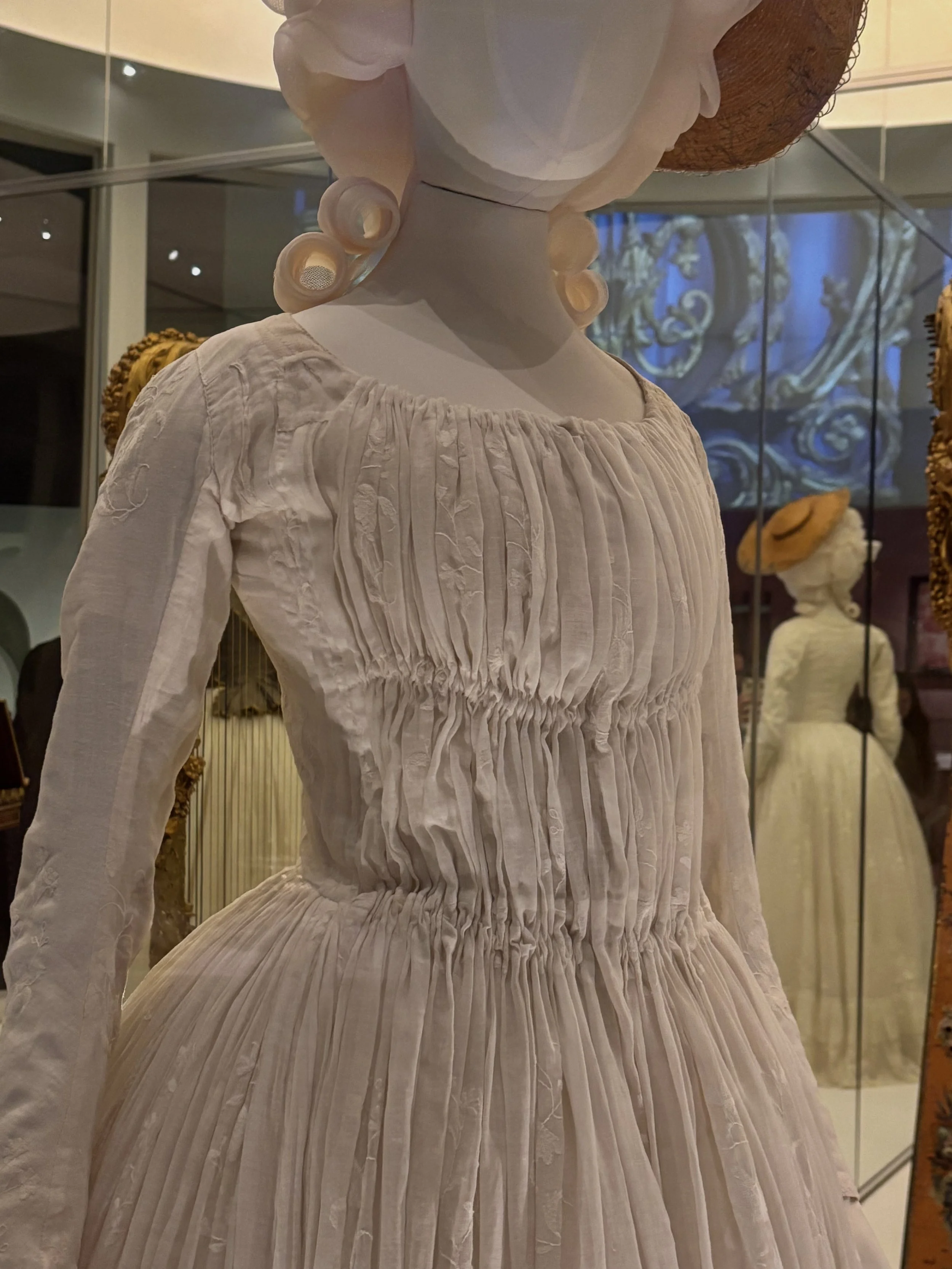
Some of Marie Antoinette’s most controversial fashion decisions were her rejecting authority. She was known to stop wearing formal court dress and embraced lighter, more informal styles away from court life. In her private life she favoured pastel colours and aesthetics inspired by ideas of nature and simplicity. The chemise à la reine, a loose white muslin dress, became a prominent part of this shift. While the gown suggested versatility, ease and femininity, it sparked outrage and scandal. At the time cotton was associated with undergarments and relied on imports, initially this undermined the French silk industry that the monarchy was expected to protect. What the queen saw as natural elegance was interpreted as unpatriotic, indecent, and economically irresponsible because of the cost of the fabric.
Fashion also played a crucial role in shaping public opinion towards Marie Antoinette. Her elaborate hairstyles, known as poufs, were very tall and were often decorated with feathers, jewels or even miniature objects. These styles were mocked in pamphlets and comic like articles that circulated throughout France. At a time of economic crisis and food shortages, her appearance became a sort of evidence for the royal’s excess. Fashion was transformed into propaganda, spreading the image of a queen who was detached from the realities of her people suffering.
As a woman, at the time occupying a highly visible position of power, Marie Antoinette faced backlash that male rulers often escaped. Her clothing, sexuality and spending were relentlessly policed by journalists and fashion became a way to discuss her behaviour. Pamphlets portrayed her as promiscuous and manipulative. Her extravagance became not just a personal failure but also a political threat. Many French people believed that she was corrupting France from within.
As she got older and the opinion of the French public remained strong, Marie Antoinette attempted to reshape her look once again. She wore darker, more conservative clothing and sat for portraits that emphasised restraint and maternal virtue. These efforts to change her image came too late. By this point, her public identity had been set in stone, fashion could no longer repair it. The same visibility through fashion that once gave her influence now made her an easy target.
During her imprisonment, Marie Antoinette was stripped of all her status and fancy clothing. Her final appearance at the guillotine before her beheading was a stark difference from the excess luxury she was accused of throughout her life.
Marie Antoinette’s legacy does not end at the scaffold. If anything, it has only grown more powerful with time. Designers continue to return to her image as a source of inspiration, drawn to the questions and tension she embodied between extravagance and rebellion, femininity and power. From John Galliano’s silhouettes to Vivienne Westwood’s takes on corsetry, references to eighteenth-century dress constantly resurface in contemporary collections. These designers aren’t just replicating her gowns they are reinterpreting the political drama within them. Using volume, height, colour and historical references to question authority, gender and excess from power.
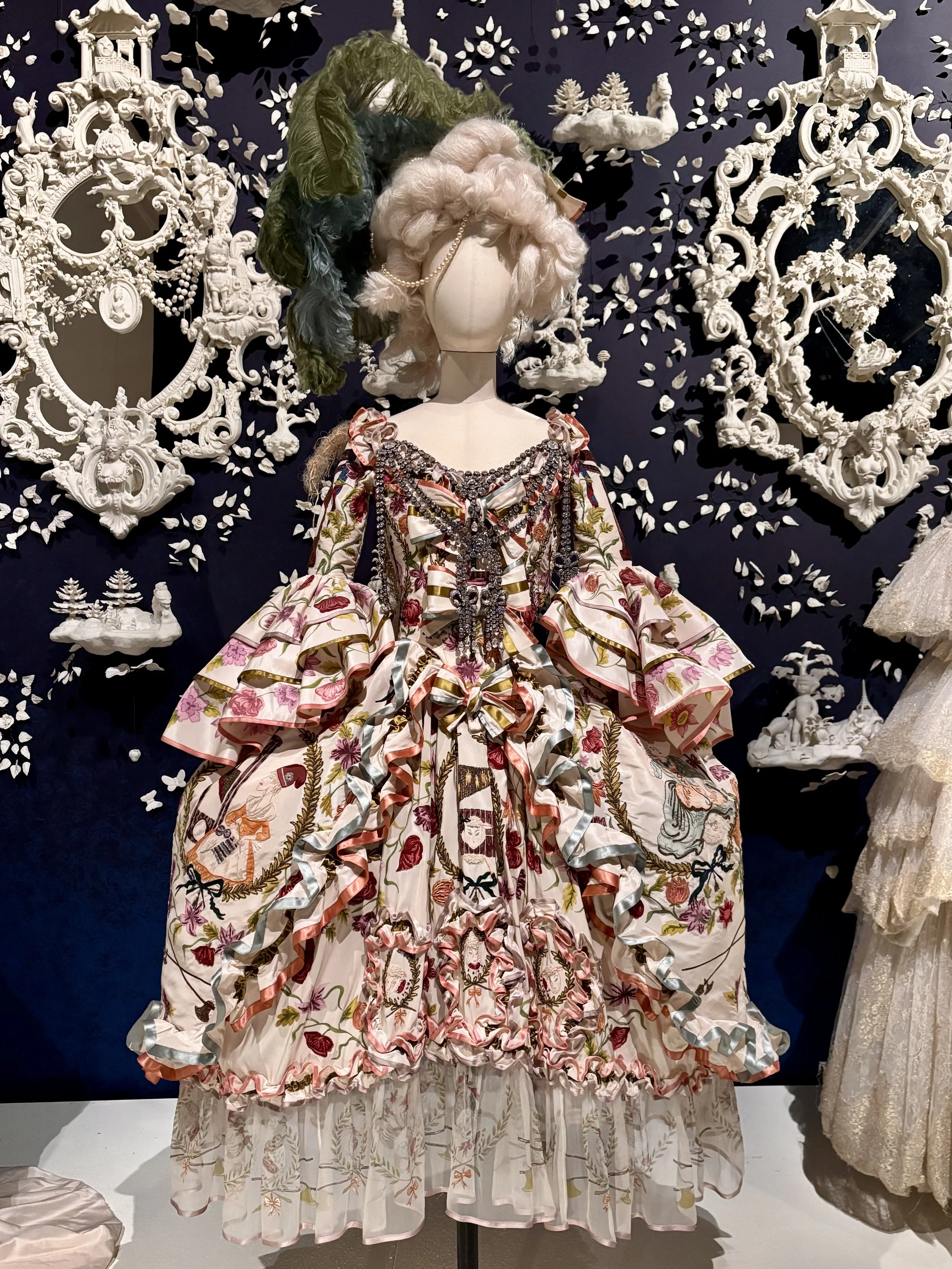
Image by Elspeth Chapman
The V&A exhibition makes clear that Marie Antoinette’s fashion choices were never unintentional. They existed within systems of power, economics, gender, and identity. Her clothing expressed resistance, modernity and a sense of individuality, but also exposed her to misinterpretation and a lot of attack from the public. Her life demonstrates how clothing can function as political language, capable of holding power, provoking backlash and shaping historical memory forever.